The ocean is the foundation of life on Earth. It gives us more than half the oxygen we breathe, feeds billions of people, absorbs vast amounts of heat and carbon, and regulates the climate. Yet despite decades of warnings from scientists, the ocean is still being damaged faster than we can protect it.
Overfishing, pollution, warming waters and weak enforcement mean that many parts of the ocean exist only on paper as “protected”. Decisions take years. Data is fragmented. At the pace we are moving today, we will not meet global goals to protect 30% of the ocean by 2030 – and the consequences will be felt by communities and ecosystems everywhere.
Subsee AI was created in response to this reality, with a simple but radical question: what if the ocean had its own guardian?
Rather than relying on slow, reactive systems, Subsee is building a new way to care for the ocean – one that works at the speed and scale the crisis demands. At the heart of this approach is a concept called an Ocean Guardian.
An Ocean Guardian is a digital steward assigned to a specific part of the sea — a stretch of the high seas, a marine protected area, or a sensitive coastal zone. You can think of it like a dedicated caretaker whose sole job is to understand that place, watch over it continuously, and help protect it from harm.
Each Guardian brings together information that is currently scattered across hundreds of reports, databases and satellite feeds: scientific research, vessel movements, fisheries data, environmental indicators and more. Instead of this information sitting unused or arriving too late, the Guardian turns it into clear, understandable insights. These insights can be used by decision-makers or acted on automatically by the software.
Crucially, this is not about replacing people. It is about allowing us to truly act at the scale and speed we need to protect 30% of the ocean by 2030. Across governments, science and conservation, there is a growing gap between what we know about the ocean and what existing systems allow us to do in response. Subsee’s Guardians help surface what matters most, when it matters — whether that is unusual fishing activity, rising pollution risk, or a window of opportunity to strengthen protection.
The ambition is bold. Subsee plans to deploy over 200,000 Ocean Guardians, creating a global network that covers all of the world’s ocean. Together, they would form a living map of comparable ocean protection scores and health data — constantly learning, updating and improving how protection happens.
The first Guardians are already being developed for some of the most vulnerable and least governed parts of the ocean, including the high seas in the Arctic and Atlantic. These areas lie beyond national borders but are critical for biodiversity and climate stability. By supporting the creation and management of marine protected areas in these waters, Subsee is helping turn international agreements into real-world action. Taking this work to scale will depend on securing the right long-term partners and funding.
What makes Subsee different is not just the technology, but the mindset. The team works like a mission-driven start-up, focused on speed, clarity and impact. In a world where environmental decisions often take years, Subsee is proving that new approaches can move much faster without sacrificing credibility or trust.
At its core, Subsee is about restoring stewardship. For too long, the ocean has been treated as too vast to manage and too distant to prioritise. By giving each part of the ocean a dedicated Guardian — one that never sleeps, never loses focus, and exists only to protect — Subsee is helping us reimagine our relationship with the sea.
The technology is powerful. But the purpose is deeply human: to ensure that the ocean can continue to support life, livelihoods and climate stability for generations to come.
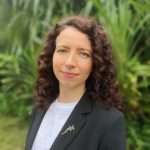
Eleanor Whittle
Eleanor is a senior climate and biodiversity expert with 12+ years of experience shaping international policy, managing global programmes, and guiding government action on climate and nature. She is also the Founder of Alopias Earth, an Asia-based consultancy helping a range of clients tackle the world’s most urgent environmental challenges — from biodiversity loss to ocean degradation — with clarity, creativity, and a global lens.