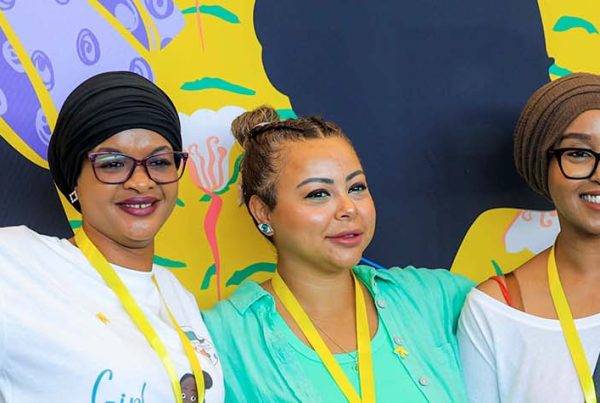
Oxford HR’s Nafeesa Usman speaks to Lexi Parfitt, Director of Public and Political Engagement at Water Witness.
Water sits behind almost everything we consume from the fruit and vegetables on supermarket shelves to the cocoa in our favourite chocolate bars. Yet the communities producing these goods often face the harshest consequences of water scarcity and pollution.
Nafeesa: For readers who may not be familiar with the campaign, could you explain what “Inequality by the Gallon” is about?
Lexi: Everything we buy from fresh fruit and veg to the cocoa in chocolate takes water to produce. To give a sense of scale, a 100-gram chocolate bar takes roughly the equivalent of 16 bathtubs of water to produce. Even something like a single avocado takes about four bathtubs of water.
The problem is that when this water is used unfairly or unsustainably, it can create real problems for people and nature in the places where those products are grown.
For example, cocoa farmers in West Africa who grow the cocoa used in chocolate often don’t have access to clean water or decent sanitation themselves. In Peru, where a lot of fresh fruit and vegetables for global markets are grown, the wells in some regions are actually running dry.
So with this campaign we’re asking a simple question: can the brands making multi-million-pound profits from these products do better in ensuring that water and human rights are protected in their supply chains? The answer is clearly yes- and we’re calling for the public to get behind our campaign to make fair and sustainable water use the global business norm.
Nafeesa: What did your research reveal about global supply chains and water use?
Lexi: We started by mapping water footprints in the supply chains behind products commonly consumed in the UK, but also across Europe and North America.
What quickly emerged were clear “hotspots” places where we’re importing products with a very high water footprint from areas that are already experiencing water scarcity. That includes things like tomatoes from Morocco, sugar from Malawi, cocoa from Côte d’Ivoire, and fresh fruit and vegetables from Peru.
One of the most striking findings was that around 70% of the UK’s water footprint is external, in other words, it’s other people’s water. And 40% of that water footprint is from unsustainable sources- including regions experiencing severe water scarcity. That was really the finding that pushed us to look deeper at what’s happening in those supply chains.
Nafeesa: What role should companies play in addressing these challenges?
Lexi: One of the key things we’re calling for is a UK Business, Human Rights and Environment Act. This would require companies to carry out mandatory human rights and environmental due diligence, and would introduce a duty to prevent human rights and environmental harms in their supply chains. Essentially, it would make sure companies are identifying and addressing issues like water overuse, pollution, or impacts on communities.
Right now, some companies are doing a lot of good work in this area, but others are not. That creates an uneven playing field. Interestingly, a number of companies themselves are actually supportive of stronger rules because it creates clarity and consistency for everyone.
Nafeesa: Water footprints can feel quite invisible to consumers. What can people do to support change?
Lexi: That’s exactly the challenge, water footprints are largely invisible. When you pick something up in a supermarket, you might think about its carbon footprint, but you probably don’t think about how much water it took to produce, or what impact that had on the communities growing it.
One thing we want to be very clear about is that this isn’t about telling consumers not to buy certain products.
The real change needs to happen at a system level. That’s why we’re encouraging people to call on the government to introduce legislation that ensures companies manage water responsibly across their supply chains.
Consumers can also write to supermarkets, share the campaign, and start conversations about the issue. Even a relatively small number of messages from customers can make companies take notice.
Nafeesa: What long-term impact are you hoping this campaign will help achieve?
Lexi: In the short term, we’re trying to build public momentum behind legislation that would ensure businesses take responsibility for water use across their supply chains.
But more broadly, we want to see the idea of fair water footprints become part of how companies and governments think about trade and sustainability.
There’s actually a lot of momentum building globally around this issue, and encouragingly, governments, companies and civil society are increasingly recognising that water stewardship is critical not just for communities and ecosystems, but also for our own food security, and the long-term resilience of global supply chains.
Nafeesa: Want to learn more or support the campaign?
Lexi: Visit Water Witness’ “Inequality by the Gallon” campaign page to learn about the hidden water footprint behind everyday products, contact your MP, and watch and share the campaign videos.
Oxford HR has been a long-term partner of Water Witness International, supporting the organisation’s leadership as it advances water justice globally.