
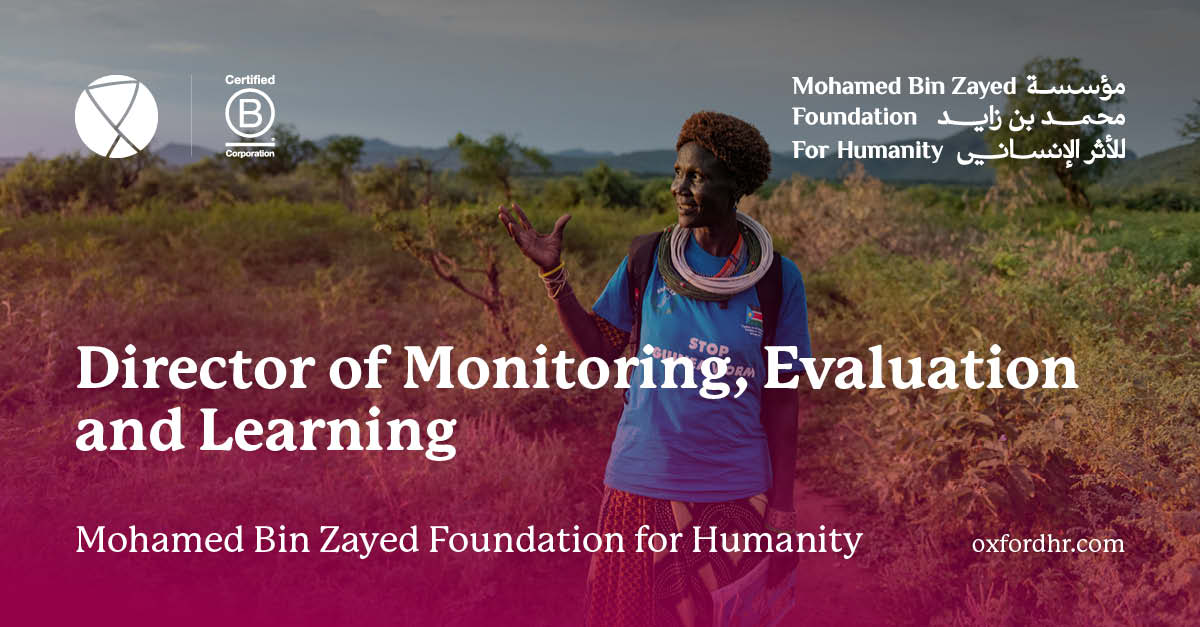

About The Mohamed Bin Zayed Foundation for Humanity
The Mohamed bin Zayed Foundation for Humanity (MBZFH) is an innovative philanthropy dedicated to advancing human potential and opportunity. Headquartered in Abu Dhabi and working across 45 countries in Africa, Asia and the Middle East, the Foundation unifies and elevates the UAE’s philanthropic efforts in global health and inclusive development. Rooted in Sheikh Zayed’s legacy of dignity and service, MBZFH builds enduring partnerships and makes transformative investments in the building blocks of human progress.
The Foundation’s focus is organized around reducing the burden of preventable diseases, strengthening health systems and enabling thriving communities. Its health portfolio spans communicable and infectious diseases, non-communicable diseases, health infrastructure, the health workforce, maternal, newborn and child health, assistive technology and access to quality healthcare. By 2030, MBZFH aims to reach more than 500 million people across more than 50 countries.
Job Summary
Reporting to the Chief Strategy Officer, the Director of Monitoring, Evaluation and Learning builds and leads MBZFH’s MEL function and establishes the discipline through which the Foundation measures results, demonstrates accountability and learns. The Director will develop and manage the institutional results framework and KPIs; define proportionate reporting and data standards; assure the quality of program indicators before investment approval; lead performance analysis, evidence validation and evaluation; and convert findings into practical recommendations for funding, partnership and strategic decisions.
The role works across MBZFH’s global health and inclusive-development portfolio, including philanthropic grants and partnerships addressing communicable and non-communicable diseases. It partners closely with Programs and Infrastructure from opportunity assessment and design through implementation, disbursement, close-out and learning, while maintaining sufficient independence to report evidence transparently and protect the integrity of evaluation findings.
Responsibilities
1. Institutional Results Framework and Strategic Alignment
- Develop, implement and periodically refine MBZFH’s institutional results framework, theories of change and KPI architecture, ensuring clear links between strategy, portfolio priorities, funded programs, organizational performance and intended outcomes.
- Define indicator protocols, contribution and attribution approaches, disaggregation requirements, assumptions, baselines, targets and data sources that allow results to be aggregated without obscuring important differences across countries, populations or funding instruments.
- Work with Strategy & Planning to align institutional priorities, annual plans and strategic dashboards with the results framework, and provide evidence and foresight that strengthen portfolio architecture and resource-allocation decisions.
- Maintain a clear line of sight from MBZFH’s 2030 ambitions to measurable outcomes, surfacing gaps, unintended effects and areas where strategic claims or targets require refinement.
2. MEL Integration in Program Design and Grant Making
- Partner with Programs and Infrastructure to embed proportionate MEL in opportunity assessment, theories of change, investment cases, implementation models and budgets across grants, technical assistance, co-financing, pooled funding and infrastructure investments.
- Co-design program- and asset-specific indicators, baselines, targets, data-collection plans, learning questions and evaluation requirements; review MEL adequacy before proposals are submitted for approval.
- Assess the strength of the evidence base for proposed and ongoing investments, including interventions addressing communicable and non-communicable diseases, and identify where pilots, implementation research or external technical assurance are needed.
- Ensure grant agreements and partner frameworks contain clear, feasible and decision-useful reporting obligations, verification arrangements and responsibilities that reflect risk, materiality and partner capacity.
3. Performance Monitoring, Data Systems and Quality Assurance
- Set Foundation-wide reporting standards, data definitions, templates, calendars and governance arrangements, working with Grant Operations to align reporting cycles, systems and data flows across the grant lifecycle.
- Lead periodic performance monitoring and portfolio review, integrating program, financial, risk and contextual information into quarterly and semi-annual dashboards for leadership and governance bodies.
- Establish proportionate data-quality assurance and evidence-validation protocols, including risk-based verification, triangulation and escalation where data are incomplete, inconsistent or insufficient for decisions.
- Improve the usability, security and accessibility of MEL data and dashboards with Business Operations, Finance and technology colleagues, while safeguarding confidential, sensitive and personal information.
4. Evaluation, Research and Evidence Generation
- Develop and manage a prioritized evaluation and learning agenda that responds to strategic uncertainty, investment risk, evidence gaps and the information needs of leadership, governance bodies, partners and affected communities.
- Design, commission and oversee independent evaluations, external learning studies and implementation research, selecting fit-for-purpose methods and qualified partners and ensuring methodological, ethical and contractual quality.
- Protect the objectivity and appropriate independence of evaluations; communicate positive, negative and inconclusive findings transparently, including limitations and implications for MBZFH’s claims, decisions and risk posture.
- Build relationships with research institutions, technical and normative agencies, multilaterals and external MEL experts to strengthen rigor, peer learning and the relevance of MBZFH’s evidence to global and country-level practice.
5. Learning, Adaptation and Knowledge Use
- Produce concise learning briefs, portfolio syntheses, evaluation summaries and decision notes that translate technical evidence into clear options and recommendations for executive, programmatic and governance audiences.
- Design learning loops and forums with Programs, Infrastructure, Strategy & Planning and partners so evidence is reviewed at defined decision points and actions, owners and follow-up are recorded.
- Track how evidence is used in pipeline choices, funding approvals, disbursements, corrective actions, renewals, close-outs and strategy refreshes, identifying where incentives or processes obstruct learning.
- Promote honest reflection on failure, unintended outcomes and differential effects, and ensure lessons are incorporated into program guidance, partner support and future investment design.
6. Reporting, Accountability and Cross-Functional Coordination
- Provide leadership and governance bodies with accurate, timely and appropriately qualified reporting on institutional and portfolio performance, emerging risks, evaluation findings and progress toward strategic outcomes.
- Partner with Communications and External Relations to translate verified results and learning into credible impact narratives, partner updates and external materials, preventing overstatement and preserving technical nuance.
- Work with Programs, Infrastructure, Grant Operations, Business Operations and Finance, Legal Affairs, and Audit & Risk Management to align evidence requirements with grant workflows, disbursement decisions, compliance, safeguarding, risk management and close-out.
- Establish clear escalation and, where appropriate, protected reporting arrangements for material evidence concerns or independent evaluations that require direct visibility by the Chief Strategy Officer, Director General or governance bodies.
7. Team, Partner and Capability Leadership
- Build, lead and develop a high-performing MEL team, setting clear accountabilities, technical standards, delivery rhythms and performance expectations for the Senior Manager, Manager and external specialists.
- Assess and strengthen the MEL capability of grantees and implementation partners through practical guidance, tools, technical assistance and proportionate capacity-building plans that reinforce local ownership.
- Manage evaluation vendors, research partners, advisors and framework experts effectively, retaining sufficient internal judgment and ensuring quality, value for money, knowledge transfer and adherence to MBZFH standards.
- Model intellectual honesty, curiosity, integrity, dignity and service, and foster a culture in which teams use evidence to challenge assumptions, improve performance and remain accountable to the people MBZFH seeks to serve.
Candidate Profile
Experience
- At least 12 years of progressively responsible experience in monitoring, evaluation, research, learning or evidence leadership in global health, philanthropy, international development or a closely related field, including substantial senior leadership responsibility.
- Demonstrated success designing and managing institutional and multi-country results frameworks, theories of change, indicator architectures, performance dashboards and learning systems for complex portfolios.
- Strong experience working across the philanthropic grant lifecycle and embedding MEL in program design, due diligence, investment decisions, partner management, performance-based disbursements, adaptation, renewal and close-out.
- Substantive global health experience, with an ability to apply MEL approaches across communicable or infectious diseases, non-communicable diseases, health systems and related inclusive-development outcomes.
- Track record commissioning and overseeing rigorous evaluations or research using qualitative, quantitative and mixed methods, and translating findings into actionable recommendations for technical and non-technical audiences.
- Experience strengthening data and MEL capability with grantees, implementation partners, governments, research institutions or multilaterals, preferably in multiple developing-country contexts across Africa, Asia or the Middle East.
- Experience leading specialist teams and cross-functional work in a startup, institutional formation or scaling environment is highly desirable.
Education and Technical Knowledge
- Advanced degree in monitoring and evaluation, public health, epidemiology, biostatistics, economics, evaluation research, international development, social sciences or another relevant discipline; equivalent depth of professional experience may be considered.
- Strong command of qualitative, quantitative and mixed methods; theory-based evaluation; contribution analysis; implementation research; sampling; data-quality assurance; synthesis; and responsible interpretation of evidence.
- Sound understanding of global health programming, philanthropic and grantmaking practice, health-system and country data constraints, partner reporting, research ethics, safeguarding, data protection and responsible data governance.
- Ability to design proportionate MEL approaches that balance rigor, utility, cost, speed and reporting burden, and to interrogate technical, financial, risk and performance data as a connected evidence base.
Leadership Capabilities
- Strategic evidence leadership – connects strategy, portfolio choices, implementation performance and learning through coherent results architecture.
- Methodological credibility – applies rigorous qualitative and quantitative judgment while selecting methods that are proportionate to the decision and context.
- Independence and integrity – protects evidence quality, reports limitations and difficult findings honestly, and resists pressure to overstate attribution or impact.
- Decision orientation – turns complex data and evaluation findings into concise implications, choices and recommendations that leaders and teams can act on.
- Partnership and diplomacy – builds trust with programs, governments, grantees, communities, donors and technical actors while maintaining appropriate challenge and accountability.
- Cross-functional leadership – creates clarity at organizational interfaces, aligns systems and moves work forward without relying solely on hierarchy.
- Communication and influence – explains evidence clearly to technical, executive, governmental, governance and public audiences without losing nuance.
- People and capability leadership – develops specialists and partners, sets high standards, delegates well and creates an inclusive, accountable and learning-oriented culture.
- Pragmatism and service – builds fit-for-purpose systems, works constructively amid ambiguity and keeps the dignity and realities of affected communities at the center of measurement and learning.
Job Features
| Job Category | Health, Humanitarian, Ottilia |
| Location | Abu Dhabi, United Arab Emirates |
| Salary | Competitive Market related |
| Closing Date | Rolling basis to 6th September 2026 |
Apply
Interested in this role? Download the appointment brief below for more information and then come back to this page to apply.
By applying with us, you agree to Oxford HR’s Privacy Policy
Job Features
| Job Category | Health, Humanitarian, Ottilia |
| Location | Abu Dhabi, United Arab Emirates |
| Salary | Competitive Market related |
| Closing Date | Rolling basis to 6th September 2026 |